
Slow march of heroes
Not every gesture is understood right away—but every story begins with one.
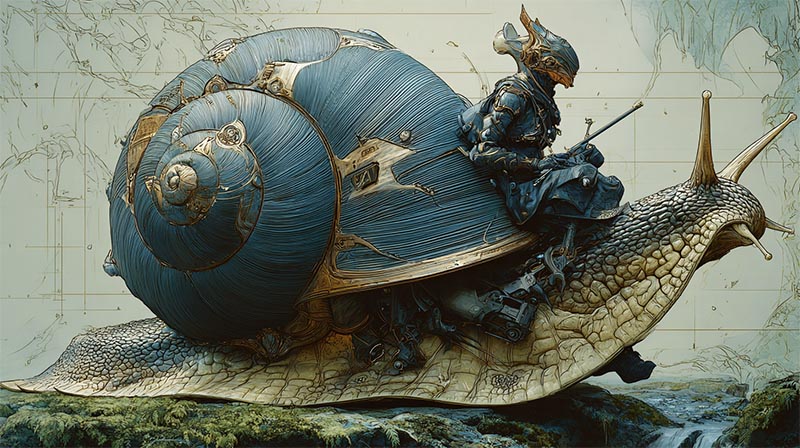
Curiosity Spark:
Some stories begin loudly. Others begin quietly. The ideas below offer gentle openings you can reshape into a story only you can tell.
1. When the Battle Ran Past
The war thundered forward without looking back. Armies charged, retreated, charged again—leaving behind broken gear, wounded animals, and half-finished victories. Only the giant snail did not chase the noise. It moved with care, carrying its rider steadily through what the battle had already forgotten.
Where fast soldiers left destruction, the slow path repaired it—cracked bridges held again. Lost animals found one another. By the time the armies realized the war had ended, the snail had already crossed the land twice—quietly undoing the damage speed had caused.
2. The Siege of Soft Footsteps
Cities had learned to fear thunder—hooves, engines, marching boots. So when a giant snail arrived at the gates, the walls laughed. Until the animals came. Mice carried stolen keys. Ravens mapped the sky. Dogs led children out through forgotten tunnels.
The rider atop the snail never attacked the city. Instead, the creature circled it day after day, its slow movement undoing the siege by starving it of urgency. Inside the walls, soldiers grew tired of waiting for violence that never arrived. One by one, they laid down their arms, confused by a hero who refused to perform.
3. The Shell That Carried the War
The war moved too fast for banners and drums, but one creature crossed it at the speed of patience. A massive snail, armored in brass and blue steel, carried a lone rider who did not shout orders or swing a blade. Instead, the rider wrote. Each mile crossed was recorded—fallen villages, silent fields, places where the fighting avoided and places it consumed.
Animals followed in quiet ranks: birds nesting in abandoned helmets, foxes guiding refugees through broken terrain, beetles polishing old medals until they gleamed again. When the armies finally noticed the slow procession, they stopped—not out of fear, but confusion. The war could not recognize something that refused to hurry.
Story Nudge:
- What does speed destroy that no one notices at first?
- Why does the hero refuse to chase the fight?
- How does repair become more powerful than attack?
- What kind of victory happens after the war rushes past?

Unlikely Leader
The image below offers a moment suspended in...
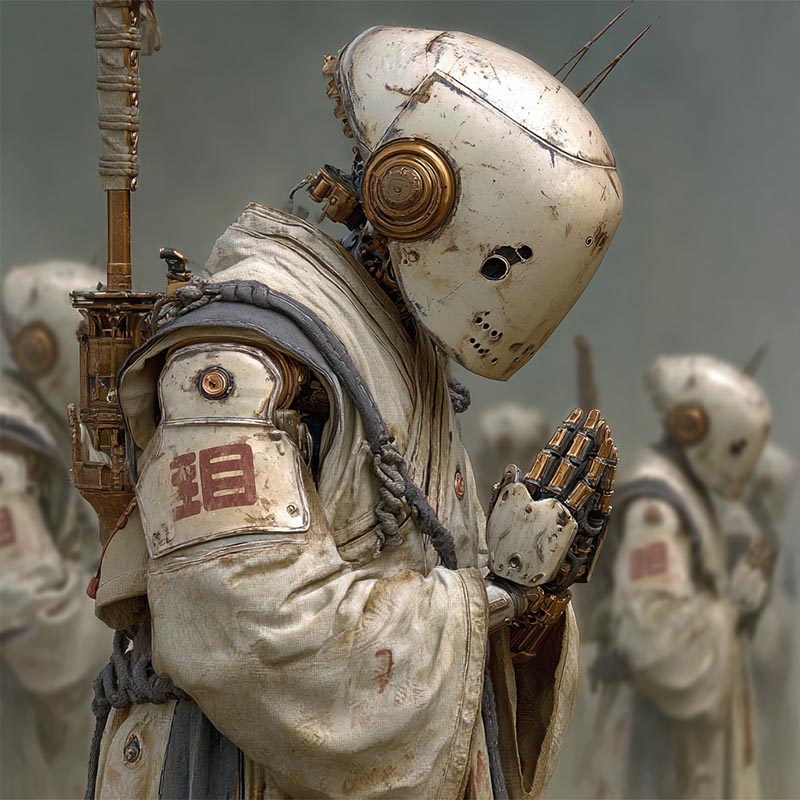
Silent Orders
The story ideas below offer different possible...

The Archivist and the Offering
The story ideas below offer different possible...
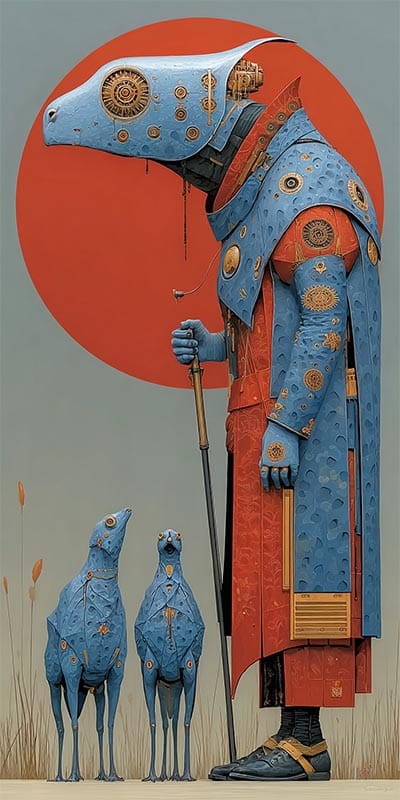
Red Sun Sentinel
The story ideas below offer different possible...

Birdie
The story ideas below offer different possible...